Training Your Blood Vessels Like a Muscle: The Deliberate Stress Your Circulation Has Been Missing
Ask most Americans what they do for their cardiovascular system, and they'll mention jogging, cycling, or maybe a treadmill gathering dust in the garage. Almost nobody thinks about directly training their blood vessels themselves. Yet emerging research on hormetic stress—the biology of beneficial, deliberate discomfort—suggests your endothelium, the delicate inner lining of every artery and capillary, responds to controlled environmental challenge much the way muscle responds to resistance.
The Biology of Beneficial Discomfort
Hormesis describes a counterintuitive phenomenon: a stressor that harms at high doses can strengthen at low doses. Radiation researchers noticed it first. Exercise physiologists confirmed it. Now vascular biologists are documenting it in the circulatory system.
When you expose your body to cold, the immediate response is vasoconstriction—vessels narrow, blood is shunted toward your core, and blood pressure momentarily rises. When you rewarm, the opposite occurs: vasodilation floods your extremities with oxygenated blood. This isn't just a party trick of physiology. Each cycle forces the endothelial lining to flex, prompting the release of nitric oxide, the signaling molecule responsible for vessel relaxation and arterial suppleness.
In other words, the vessel wall gets a workout. Repeated over weeks and months, this cycle appears to encourage endothelial function, much as repeated bicep curls encourage muscle fiber adaptation.
Cold Exposure: Precision Over Heroics
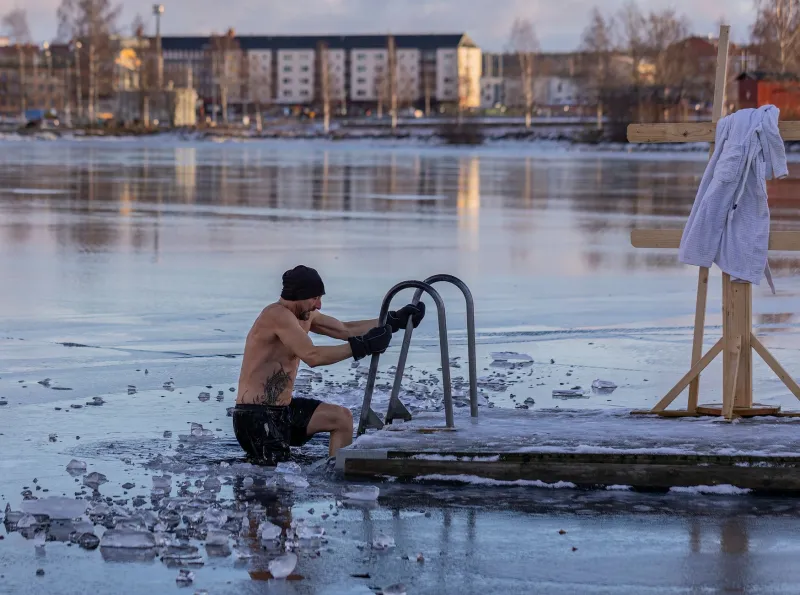
Cold plunges have become a social media spectacle, but the vascular benefits don't require an ice bath in a stock tank in your backyard. Research on cold-water immersion suggests the endothelial stimulus comes from the transition—the constriction and rewarm—rather than masochistic duration.
A practical starting point for most adults:
- End your regular shower with 30 to 60 seconds of cold, breathing slowly through the discomfort
- Progress gradually over two to three weeks rather than shocking your system
- Avoid extended cold exposure if you have diagnosed cardiovascular disease or uncontrolled hypertension, since the acute blood pressure spike is real
The goal is a trainable stimulus, not a test of toughness. Think of the first cold shower as your first day back at the gym: humbling, brief, and effective.
The Sauna Side of the Equation
Finland offers one of the most compelling natural experiments in vascular health. Longitudinal studies of Finnish men have associated frequent sauna use—four or more sessions per week—with notably better cardiovascular outcomes than occasional use.
Heat works through a different mechanism than cold. Sauna exposure raises heart rate and plasma volume dynamics in ways that mimic moderate aerobic exercise, while promoting vasodilation and arterial compliance. Heat shock proteins, upregulated during thermal stress, appear to support cellular repair throughout the circulatory system.
For Americans without a Finnish lake house, infrared saunas at gyms, spas, or home units offer a lower-temperature alternative (typically 120–140°F versus traditional saunas at 180–200°F) with a gentler entry point.
Contrast Hydrotherapy: The Old Fashioned That Works
Contrast hydrotherapy—alternating hot and cold exposure—is hardly new. Roman bathhouses, Scandinavian spas, and athletic training rooms have used it for over a century. What's new is the mechanistic understanding: the repeated dilation-constriction cycling acts as a pump for circulation, potentially improving blood flow dynamics and supporting the vessel wall's elastic recoil.
A simple home protocol:
- Three minutes in a hot shower
- Thirty seconds cold
- Repeat the cycle three to four times, ending cold
- Practice slow nasal breathing throughout to keep the stress response productive rather than panicky
Breathwork: The Zero-Equipment Vascular Tool
Between cold and heat sits a third lever most people ignore entirely. Slow, controlled breathing at roughly five to six breaths per minute influences vagal tone, which in turn modulates vascular tone. Studies on slow breathing practices have shown measurable improvements in endothelial function and blood pressure regulation over weeks of consistent practice.
Five minutes daily of extended-exhale breathing—inhale for four counts, exhale for six—costs nothing and requires nothing but a chair.
Building a Weekly Vascular Training Plan
A realistic schedule for a busy American adult:
- Monday, Wednesday, Friday: Cold-finish showers plus five minutes of slow breathing
- Tuesday, Thursday: Sauna or hot bath session, 15–20 minutes
- Weekend: One contrast cycle, or simply rest
Consistency beats intensity. Your endothelium adapts to repetition, not heroics. The paradox at the heart of this approach—that deliberate vasoconstriction can ultimately produce more resilient, responsive vessels—reflects a broader truth about human biology. Systems strengthen when challenged in measured doses. Your blood vessels are no exception, and they've been waiting for the workout.