After 40, Her Blood Changed Everything: The Hormonal Vascular Shift Medicine Keeps Ignoring

Photo: Muybridge, Eadweard, 1830-1904, Public domain, via Wikimedia Commons
For most American women, the conversation around menopause centers on the familiar catalog of symptoms: interrupted sleep, temperature dysregulation, shifting moods, and changes in body composition. What rarely enters that conversation — in primary care offices, women's health clinics, or mainstream wellness media — is what is simultaneously happening inside the blood vessels.
Estrogen, it turns out, is not merely a reproductive hormone. It is a potent vascular architect. And when its levels begin their irreversible decline during the perimenopausal years, the circulatory consequences are both measurable and significant. For women who want to protect their vitality well into their later decades, understanding this relationship is not optional — it is essential.
Estrogen as a Circulatory Guardian
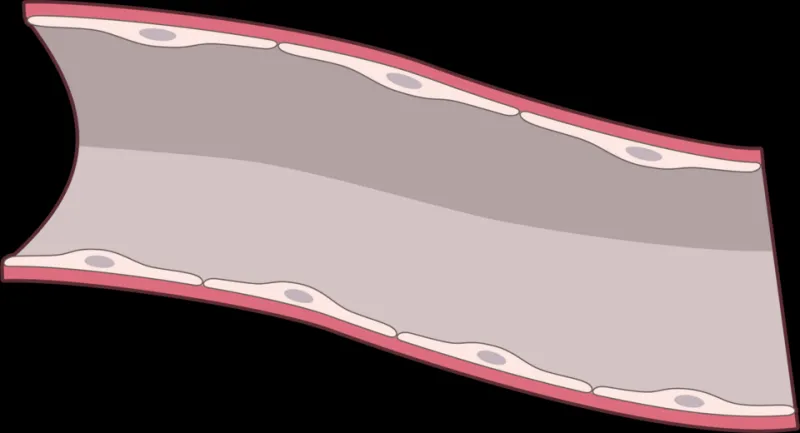
For the better part of a woman's reproductive life, estrogen functions as a quiet but powerful protector of vascular health. One of its most important roles involves the regulation of nitric oxide — the signaling molecule responsible for keeping blood vessels relaxed, dilated, and responsive to the body's demands.
Estrogen stimulates endothelial nitric oxide synthase, the enzyme that produces nitric oxide within the inner lining of blood vessels. This means that throughout the premenopausal years, women generally enjoy superior vascular flexibility compared to men of the same age. Their vessels open readily under physical and emotional stress, blood flows with relative ease, and arterial stiffness accumulates more slowly.
Estrogen also exerts a favorable influence on lipid profiles, keeping LDL cholesterol lower and HDL cholesterol higher. It suppresses inflammatory cytokines that would otherwise damage vessel walls. It modulates platelet activity, reducing the tendency toward excessive clotting. In short, this single hormone was managing an entire portfolio of blood health variables — often without women ever realizing it.
When the Architecture Begins to Crack
Perimenopause typically begins in a woman's mid-to-late 40s, though for some it arrives earlier. Estrogen levels do not decline in a straight line — they fluctuate erratically before ultimately dropping to a fraction of their former concentrations. This hormonal turbulence creates a period of vascular instability that is often misread as generalized aging or stress.
As estrogen withdraws, nitric oxide production falls measurably. Blood vessels lose a critical stimulus for relaxation and dilation. The result is increased vascular resistance — vessels that are slower to respond, more prone to constriction, and less capable of accommodating changes in blood flow demand. Women may notice this as reduced exercise tolerance, increased resting blood pressure, or a persistent sense of physical heaviness that no amount of rest seems to resolve.
Simultaneously, arterial stiffness accelerates. The elastic fibers within vessel walls that once allowed arteries to expand and recoil with each heartbeat begin to stiffen. This is not a gradual, decades-long process in the way many assume — research has documented that the rate of arterial stiffening increases sharply in the years immediately surrounding the final menstrual period. The transition, in other words, is a vascular inflection point.
Blood Viscosity and the Clotting Shift
Another dimension of this hormonal transition that receives almost no attention in mainstream women's health discussions is the change in blood viscosity and coagulation dynamics.
Estrogen's influence on clotting factors is complex, but its withdrawal is associated with a shift toward a more prothrombotic environment. Fibrinogen — a protein that contributes to clot formation and increases blood thickness — tends to rise in postmenopausal women. Platelet aggregation, which estrogen had helped moderate, may become more pronounced. The blood, in essence, becomes more prone to sluggish flow and inappropriate clotting events.
This shift partly explains why cardiovascular disease risk in women, which trails men's risk considerably during the reproductive years, converges aggressively after menopause. By the time American women reach their mid-60s, their cardiovascular risk profile is virtually indistinguishable from their male peers. The hormonal shield has been removed, and the vascular consequences compound year over year.
The Oxygen Delivery Equation
One of the less-discussed consequences of estrogen loss involves red blood cell dynamics and oxygen delivery efficiency. Estrogen supports erythropoiesis — the production of red blood cells — and its decline can contribute to subtle reductions in red blood cell count and hemoglobin concentrations. While frank anemia is not the typical outcome, even marginal reductions in oxygen-carrying capacity can translate into the fatigue, mental fog, and diminished physical endurance that so many women in their late 40s and 50s attribute simply to "getting older."
When reduced oxygen delivery combines with stiffer vessels and thicker blood, the circulatory system is working against itself. The heart must generate more pressure to move blood through less compliant arteries. Tissues receive oxygen less efficiently. Recovery from exertion takes longer. The downstream effects touch virtually every organ system, including the brain.
What Blood-Specific Interventions Can Address
The good news is that vascular biology is not static. The changes associated with estrogen withdrawal are real and significant, but they are also addressable through targeted interventions aimed specifically at the mechanisms being disrupted.
Supporting nitric oxide production through nutritional means — including compounds such as L-arginine, L-citrulline, and dietary nitrates found in beet-derived ingredients — can partially compensate for the lost estrogenic stimulus on endothelial function. These pathways do not replicate hormonal activity, but they engage the same downstream mechanism: vessel relaxation and improved blood flow responsiveness.
Addressing blood viscosity through adequate hydration, omega-3 fatty acid intake, and targeted supplementation can help counteract the prothrombotic drift associated with hormonal transition. Magnesium, which supports vascular smooth muscle relaxation and has been shown to modulate platelet activity, deserves particular attention in this population.
Anti-inflammatory nutritional strategies matter here as well. The loss of estrogen's anti-inflammatory effects leaves vessel walls more vulnerable to oxidative stress and chronic low-grade inflammation — the same inflammatory environment that accelerates atherosclerosis. Polyphenol-rich compounds, including resveratrol and quercetin, have demonstrated meaningful antioxidant activity within the vascular endothelium and represent a rational component of a blood health protocol for women in this life stage.
Iron status also warrants monitoring. While many premenopausal women contend with iron depletion due to menstrual loss, the postmenopausal period brings a different challenge — iron levels may rise, and excess iron is itself a pro-oxidant that can damage vessel walls. Blood health strategies for women over 40 should account for this shift rather than defaulting to the iron-supplementation assumptions that governed the earlier decades.
A Window That Closes Gradually
Vascular changes associated with estrogen decline do not happen all at once, and they are not fully irreversible — particularly if addressed during the perimenopausal window rather than years after the transition is complete. The endothelium retains a meaningful degree of plasticity, and lifestyle, nutrition, and targeted supplementation can influence its function at virtually any age.
But the window for the most impactful intervention is real. Women who begin prioritizing blood health in their early-to-mid 40s — before the vascular consequences of hormonal decline have fully compounded — are in a meaningfully better position than those who wait for symptoms to become unmistakable.
Conventional medicine has been slow to integrate this understanding into routine women's health care. The cardiovascular risk that follows menopause is well-documented in the research literature, yet the conversation in most clinical settings remains focused on cholesterol numbers and blood pressure readings rather than the upstream vascular biology driving those numbers.
For women who want to take a more proactive stance, the science of blood health offers a clear and actionable framework. The estrogen-blood connection is not a peripheral concern — it is central to how women age, how they feel, and how long they maintain the vitality that makes life worth living.