The Silent Architect of Your Circulation: How Nitric Oxide Governs Every Beat of Your Vascular Life
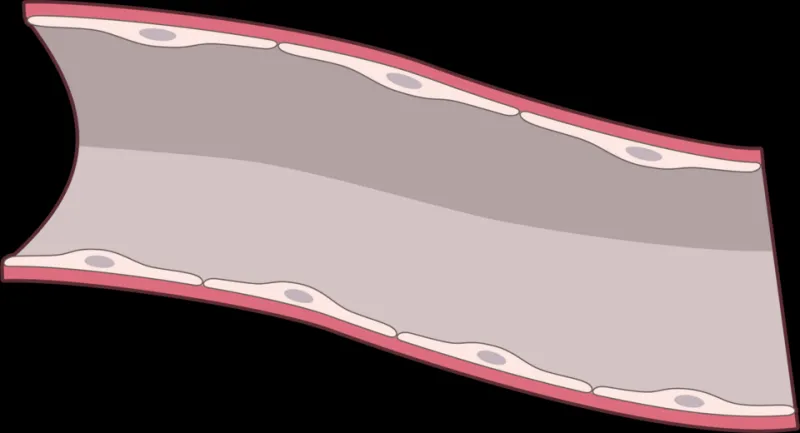
Photo: Courtesy of NIAID Ryan Kissinger, Public domain, via Wikimedia Commons
There is a molecule working silently inside the inner lining of every blood vessel in your body right now. It is not a protein, not a hormone, and not a vitamin. It is a gas—a remarkably short-lived, extraordinarily powerful signaling compound called nitric oxide. Despite its chemical simplicity, nitric oxide may be the single most important regulator of blood vessel health that most Americans are not paying attention to.
Understanding what nitric oxide does—and what happens when your body produces too little of it—is not merely an academic exercise. It is, quite literally, a matter of how well your blood moves, how efficiently your cells receive oxygen, and how effectively your body sustains energy from one hour to the next.
What Nitric Oxide Actually Does Inside Your Blood Vessels
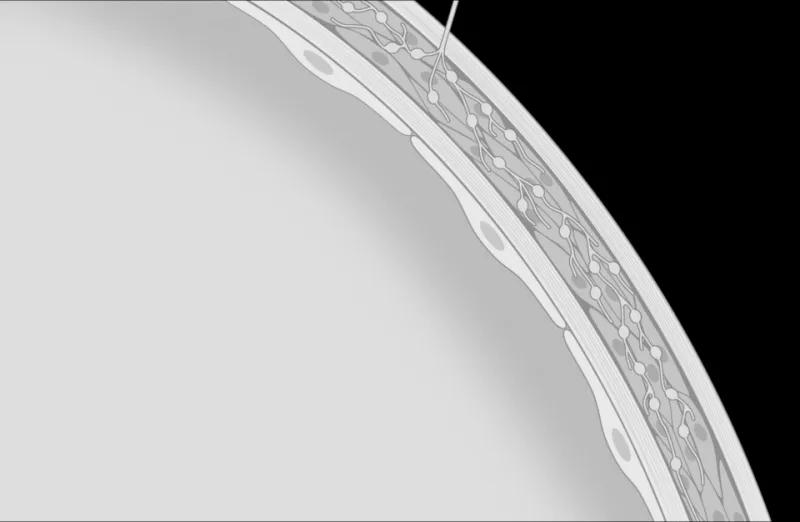
Nitric oxide is produced primarily by a specialized layer of cells called the endothelium, which lines the interior surface of every artery, vein, and capillary in your body. When this lining is healthy and responsive, it continuously synthesizes nitric oxide through an enzyme known as endothelial nitric oxide synthase, or eNOS.
Once released, nitric oxide diffuses into the surrounding smooth muscle cells of the vessel wall, triggering a cascade that causes those muscles to relax. This relaxation is what physicians refer to as vasodilation—the widening of blood vessels. The consequences of vasodilation are far-reaching: blood pressure drops, flow resistance decreases, and tissues downstream receive a richer, more consistent supply of oxygenated blood.
But vasodilation is only the beginning of nitric oxide's portfolio. This molecule also inhibits the excessive clumping of platelets, reduces the adhesion of inflammatory cells to vessel walls, and helps prevent the oxidative damage that initiates arterial plaque formation. In essence, nitric oxide functions as both a traffic manager and a maintenance crew for your entire circulatory infrastructure.
The Modern Lifestyle's War on Nitric Oxide
Here is where the science becomes both sobering and actionable. The conditions of contemporary American life are, in many respects, systematically hostile to nitric oxide production.
Sedentary behavior is perhaps the most pervasive offender. Physical movement—particularly aerobic activity—creates shear stress along vessel walls, and it is precisely this mechanical force that stimulates eNOS to produce nitric oxide. When Americans spend eight to ten hours seated, that stimulation disappears. The endothelium, receiving no mechanical signal to produce nitric oxide, gradually becomes less responsive. Researchers refer to this deterioration as endothelial dysfunction, and it is considered an early, measurable precursor to cardiovascular disease.
Dietary patterns compound the problem considerably. Diets high in processed foods, refined sugars, and oxidized fats generate systemic oxidative stress. Free radicals produced in this environment degrade nitric oxide almost as soon as it is synthesized, effectively neutralizing it before it can reach smooth muscle cells. Simultaneously, diets low in leafy greens and beets deprive the body of dietary nitrates—compounds that serve as an alternative biochemical pathway for nitric oxide production, particularly during periods of low oxygen availability.
Chronic sleep deprivation, a condition affecting roughly one-third of American adults according to the Centers for Disease Control and Prevention, also impairs endothelial function. During restorative sleep, the body undergoes vascular repair processes that depend in part on healthy nitric oxide signaling. Disrupting that window consistently leaves the endothelium in a state of perpetual under-recovery.
Tobacco use and chronic stress round out the picture. Cigarette smoke directly damages endothelial cells and depletes the antioxidant reserves needed to protect nitric oxide from degradation. Elevated cortisol levels associated with chronic psychological stress have been shown in multiple studies to suppress eNOS activity and promote vascular inflammation.
The Nutrient Connection: What Your Diet Can Do
Restoring nitric oxide production does not require pharmaceutical intervention as a first step. The body possesses robust biochemical machinery for generating this molecule, provided it receives the right raw materials and environmental conditions.
Dietary nitrates, found abundantly in arugula, spinach, beets, and celery, are converted in the body through a two-step process—first to nitrite by oral bacteria, then to nitric oxide in the acidic environment of the stomach and bloodstream. This pathway, known as the nitrate-nitrite-nitric oxide pathway, operates independently of eNOS and can partially compensate when endothelial function is compromised.
The amino acid L-arginine serves as the primary substrate for eNOS-driven nitric oxide synthesis. Foods rich in L-arginine include turkey, pumpkin seeds, soybeans, and peanuts. However, it is worth noting that simply flooding the body with L-arginine does not guarantee proportional increases in nitric oxide output; the efficiency of conversion depends heavily on the availability of a cofactor called tetrahydrobiopterin (BH4) and the overall redox environment of the endothelium.
Antioxidant-rich foods—particularly those containing vitamin C, polyphenols from dark berries, and flavonoids from cocoa—play a protective role by neutralizing the free radicals that would otherwise degrade nitric oxide before it can act. Think of these compounds as a preservation system, extending the functional life of the nitric oxide your body works to produce.
Movement as Medicine for Your Endothelium
No dietary strategy fully substitutes for the vascular stimulus provided by regular physical activity. Even modest increases in movement—thirty minutes of brisk walking five days per week—have been demonstrated in clinical research to meaningfully improve endothelial function and increase nitric oxide bioavailability over time.
High-intensity interval training appears particularly effective at stimulating eNOS expression, likely because the rapid fluctuations in blood flow during interval work create intense, repeated shear stress events along vessel walls. For those managing existing cardiovascular concerns, even gentle resistance training has been shown to improve endothelial responsiveness, suggesting that the type of movement matters less than the consistency of engagement.
Oral Health: An Overlooked Link in the Chain
One dimension of nitric oxide production that receives almost no mainstream attention is the role of the oral microbiome. The first step in the dietary nitrate pathway—the conversion of nitrate to nitrite—occurs not in the gut, but in the mouth, via bacteria residing on the tongue and between the teeth.
Antibacterial mouthwashes, when used habitually, have been shown in peer-reviewed research to significantly reduce oral nitrite production and, consequently, lower blood nitric oxide levels. This does not mean oral hygiene should be abandoned; rather, it suggests that the indiscriminate use of antiseptic rinses deserves reconsideration in the context of overall vascular health.
A Systems Perspective on Blood Vessel Health
Nitric oxide does not operate in isolation. It is one node in a vast, interconnected network of vascular signaling mechanisms. However, its position in that network is uniquely central—influencing pressure regulation, platelet behavior, inflammatory response, and tissue perfusion simultaneously.
For those committed to genuine, sustained blood health, understanding nitric oxide is not optional. It is foundational. The choices made at the dinner table, in the gym, at bedtime, and even at the bathroom sink each carry implications for how well this molecule is produced, protected, and utilized.
Fueling your blood well means attending to the architecture that carries it—and that architecture speaks, above all, in the language of nitric oxide.